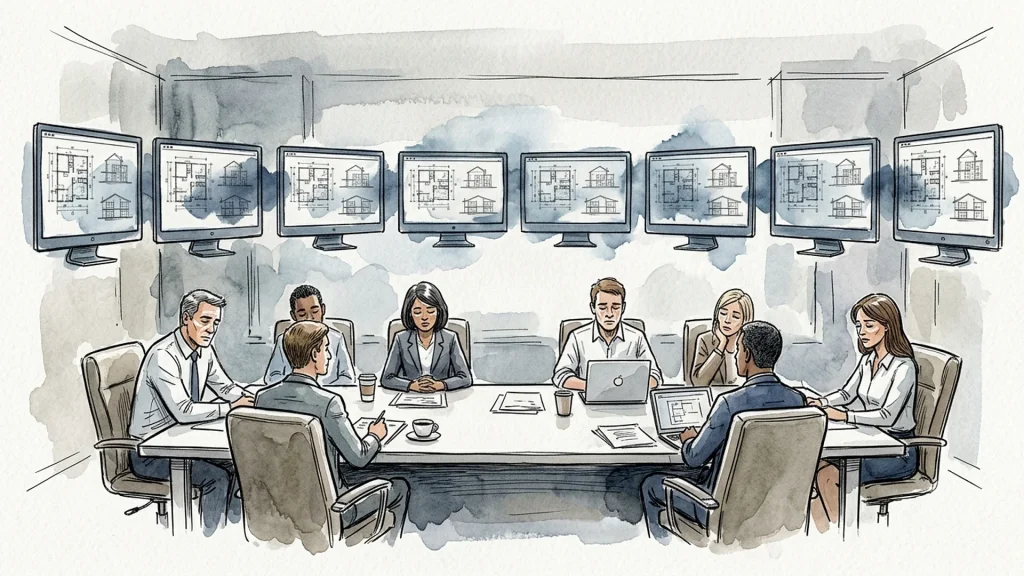
Picture a selection committee reviewing six engineering firm websites in a single afternoon. They click through project page after project page, and every one looks identical: square footages, building types, client names, a few polished photos. Nothing explains how one firm solved a problem another couldn’t, or why their technical judgment made the difference on a complex pursuit. That’s the reality most AEC project portfolio websites deliver today, and it’s costing firms shortlist placements they deserve to win!
The problem isn’t your work. It’s how your engineering firm project pages tell the story of that work. When selection committee engineering firms evaluate your portfolio and find only credentials, you become interchangeable. Interchangeable firms don’t get the call. This article shows marketing directors, principals, and BD (business development) leaders exactly how to rebuild their engineering case studies website so it communicates the judgment, constraints, and innovations that make their firm genuinely different.
What Selection Committees Are Actually Looking For on Engineering Firm Project Pages
- Project portfolio pages are the most-visited section of your website during shortlisting decisions
- Committees evaluate technical judgment, not just sector experience
- Generic project descriptions erase differentiation that technically superior firms have earned
- Without technical narrative, committees default to firm size and reputation alone
However, here’s the reality: selection committees spend the majority of their evaluation time on engineering firm project pages. Your portfolio isn’t a nice-to-have; it’s the primary decision-making tool during shortlisting. Most firms are squandering that moment completely!
Committees aren’t just scanning for sector fit. They’re actively searching for evidence of technical judgment: how your firm identified constraints, weighed competing alternatives, and applied innovative solutions under real-world pressure. That’s the standard of care they need before inviting you to interview.
Yet most AEC project portfolio websites deliver nothing more than building type, square footage, and a completion date. That’s not a project page; it’s a receipt. As a result, technically superior firms get undervalued against competitors with better-told narratives. As explored in our broader guide on marketing for engineering firms: how to turn technical expertise into a website that wins work and talent, differentiation lives in judgment and experience, not credentials alone.
The Engineering Case Study Framework: Structuring Projects to Communicate Technical Differentiation
- Open with the constraint, not the building type or square footage
- Document alternatives considered and why your firm rejected them
- Articulate innovations tied specifically to project constraints
- Include measurable outcomes that prove engineering value
- Organize case studies by challenge complexity, not sector alone
The single most powerful shift you can make is structural: lead with the problem, not the product. Start every case study with the technical constraint or site condition that made the project genuinely hard. For example, a seismic retrofit in an occupied hospital, a data center cooling challenge with strict PUE targets, or a complex MEP coordination problem on a fast-track schedule. These openings immediately signal engineering depth to a selection committee.
Next, document the alternatives your team evaluated and why you rejected them. This is where most engineering case studies websites go completely silent, and it’s a massive missed opportunity! Showing trade-off analysis demonstrates how your firm thinks under pressure. That analytical transparency is exactly what institutional clients need when deciding who makes the shortlist.
Follow that with the specific innovation your team applied, grounded in the project’s actual constraints. Then close with measurable outcomes: schedule savings, cost performance, technical benchmarks achieved. Numbers transform a narrative into proof. Finally, organize your AEC project portfolio by challenge complexity rather than sector alone, directly supporting the approach outlined in 5 ways your engineering firm’s website is costing you shortlist placements.
Converting Generic Project Listings into Pursuit-Ready Case Studies
- Feature 4-6 deeply developed projects instead of 15-20 interchangeable listings
- Move through five elements: problem, constraints, approach, innovation, and quantified outcomes
- Use technical visuals to communicate engineering judgment faster than narrative alone
- Target 800-1,200 words per case study with scannable headings
The transformation starts with ruthless curation. Instead of showcasing 15-20 projects as interchangeable line items, your engineering firm project pages should feature 4-6 strategically selected projects, each telling a fundamentally different story about your firm’s technical range. Depth beats volume every time!
Each case study should move through five elements: the client’s initial problem, the constraints that created real complexity, your firm’s decision-making process, the specific innovations applied, and the quantified outcomes achieved. This structure gives selection committees exactly what they need to evaluate fit, without making them search for it.
For MEP and structural work especially, visual documentation is non-negotiable. Technical drawings, performance comparisons, and process diagrams communicate engineering judgment far more effectively than narrative paragraphs alone. Committees reviewing multiple firms will remember the one that showed its thinking. Format for the reviewer’s reality: target 800-1,200 words per case study, use clear section headings, and build visual hierarchy so a committee member can find the right signal in seconds.
Making Project Pages Serve Double Duty: Proposal Support and BD Collateral
- Well-structured case studies create consistency between your website and your proposals
- Optimized project pages become pre-built BD collateral, reducing time spent recreating narratives
- Smart tagging lets committees and BD teams filter for exactly the expertise they need
Here’s something most BD teams don’t realize: your engineering case studies can do far more than attract visitors! When structured well, they become reusable proposal content. Selection committees who discover your firm during shortlisting will often encounter those same projects again inside your proposal, and that consistency powerfully reinforces your technical narrative.
As a result, your BD team wins too. Improving your shortlist placement engineering strategy starts with project pages optimized as pre-built collateral for pursuit kick-offs, RFQ responses, and client presentations. Instead of recreating project narratives from scratch every time, your team pulls directly from a living, structured library. That’s a real competitive advantage!
Standardize how you collect and present project information across your site. Include client type, project delivery method, team composition, and key challenges overcome. Then tag case studies by discipline, challenge type, and sector so committees can filter instantly for relevant expertise. This strategic approach is covered further in our guide on pursuit-ready landing pages: how engineering firms can build digital collateral that supports every proposal.
Your Technical Depth Deserves a Website That Proves It
Selection committees aren’t choosing the firm with the longest project list. They’re choosing the firm whose story makes them feel confident. Right now, most engineering firm websites tell committees almost nothing useful: just square footages, building types, and client logos that look identical to every competitor on the shortlist.
Rebuild your project pages around engineering judgment: the constraints you navigated, the alternatives you weighed, the outcomes you delivered. Structure your case studies by challenge complexity. Make every page work as both a digital asset and proposal collateral. For a broader look at turning technical expertise into a competitive web presence, explore our guide on marketing for engineering firms: how to turn technical expertise into a website that wins work and talent.
Ready to stop blending in? Storify helps engineering firms build story-driven websites that committees actually remember. Let’s talk!