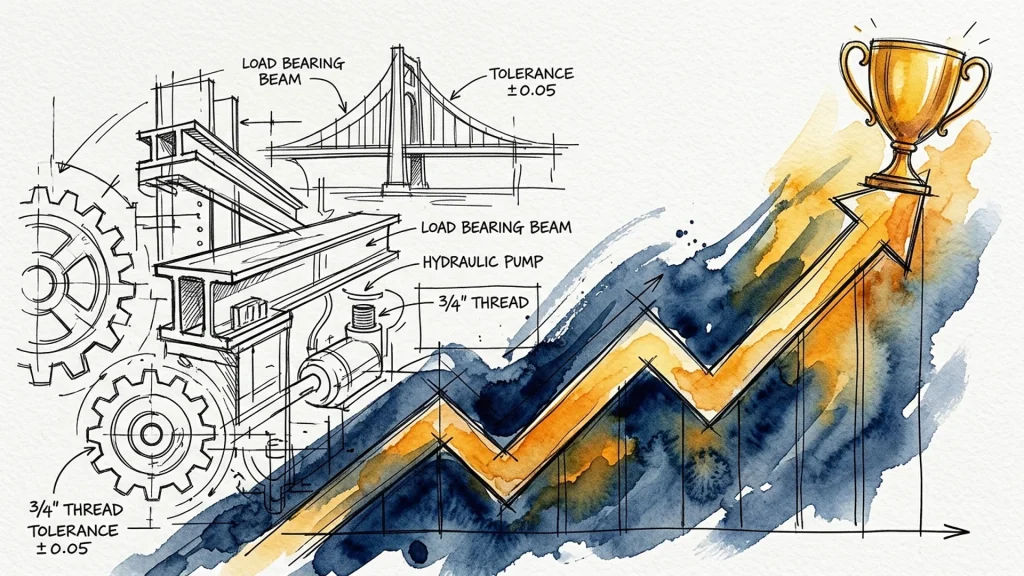
Your engineering firm has solved problems most competitors never encounter. You’ve navigated complex seismic retrofits, coordinated intricate MEP systems across million-square-foot facilities, and delivered technically demanding projects requiring genuine judgment. Yet when a selection committee visits your website, they see the same generic project photos and capability lists they saw on the last three firms they evaluated. That painful disconnect is costing you shortlist placements every single pursuit cycle!
This is the defining challenge of marketing for engineering firms today: the firms winning the most technically demanding work are often the worst at communicating why they win it. Your differentiation lives in your engineers’ heads and your project files, not on your website. This guide provides a strategic framework for turning deep technical expertise into an engineering firm website strategy that actively drives pursuits, builds recruiting pipelines, and positions your firm exactly where it deserves to be.
Why Your Website Fails to Communicate Technical Differentiation
- Selection committees can’t distinguish mid-market engineering firms because websites lead with credentials, not judgment
- Brochure-style websites hide domain expertise that differentiates structural, MEP, civil, and specialty firms
- Senior engineer recruits see generic copy instead of evidence of technical ambition
- Auditing your site against evaluator needs reveals the gap between capability and communication
Selection committees evaluating your firm online often cannot tell you apart from competitors. Most engineering firm websites lead with the same generic credentials: years in business, project counts, sector checkboxes. What evaluators actually need is evidence of technical judgment, decision-making complexity, and specific expertise signaling your firm can handle their most demanding challenges.
Brochure-style websites are the core culprit. They compress rich project experience into a photo, a headline, and a square-footage stat. Methodological rigor disappears. As explored in why selection committees can’t tell engineering firms apart online and how to fix your project pages, the fix requires project narratives that expose the engineering problem, the decision-making process, and the measurable outcome.
Recruiting suffers equally. Senior engineers evaluating your firm see stock photography and generic copy instead of named profiles and evidence of technical ambition. Meanwhile, technical depth disappears on most firm websites because no one has built a messaging framework designed to surface it. That audit is where every effective engineering firm digital marketing strategy must begin.
The Three Pillars of Technical Credibility Online
- Project narrative strategy that showcases real engineering complexity, not just portfolio listings
- Engineer-led content and profiles that make technical expertise visible to evaluators and recruits
- Pursuit-ready digital collateral supporting every stage of business development
Project narrative strategy is the foundation of effective AEC marketing strategy. Rather than listing completed projects, story-driven pages reveal the why behind every decision: the risk mitigation strategies, structural constraints, and MEP coordination challenges your team solved. This is content that moves your firm from RFQ to shortlist!
Engineer-led content is equally powerful. Named technical experts with visible specializations signal organizational depth that generic bios simply cannot. This approach also attracts senior recruits. Explore how structural and MEP firms recruit senior engineers with their website rather than relying solely on job boards.
Pursuit-ready digital collateral ensures selection committees find compelling evidence of relevant expertise when they research your firm. Pursuit-ready landing pages built to support every proposal transform your website into an active business development (BD) tool. Meanwhile, ranking for the technical searches that actually drive pursuits ensures your firm surfaces when it matters most. Tie it all together with a mobile-friendly, technically optimized site that makes case studies instantly accessible to every evaluator who finds you!
A Phased Approach to Translating Expertise Into Digital Wins
- Phase 1: Audit your firm’s real technical differentiation and define your target audience
- Phase 2: Transform project pages from portfolio listings into engineering problem-solving narratives
- Phase 3: Build engineer visibility through named profiles and published thought leadership
- Phase 4: Develop pursuit-specific assets targeting your strongest sectors and project types
Phase 1 starts with an honest audit. Map your firm’s actual technical differentiation: specialized sectors, complex project types, unique methodologies. Then define exactly who you need to reach, whether selection committees evaluating negotiated work or senior engineers considering a move. Without this clarity, every subsequent effort misses the mark.
Phase 2 transforms project pages from passive listings into active demonstrations of engineering judgment. Move from “we built this” to “here’s the complexity we solved and why our approach was superior.” Selection committees respond to that story! Reviewing five ways your engineering firm’s website is costing you shortlist placements will sharpen your priorities here.
Phase 3 establishes individual engineer visibility. Create named profiles, publish technical case studies authored by your experts, and build a content calendar demonstrating ongoing innovation. Our content framework for engineers who hate writing makes this phase far more achievable than it sounds. Additionally, studying how top competitors position themselves online reveals what technical credibility actually looks like in practice.
Phase 4 builds pursuit-specific assets optimized for AEC marketing strategy execution. Finally, measure relentlessly! Use analytics and KPIs that connect your website directly to revenue to refine based on what converts, not just what looks polished.
Getting Technical Staff Aligned Around Content Creation
- Use frameworks and templates to make content creation accessible to busy engineers
- Align marketing, BD, and technical leadership around the website as a business priority
- Build workflows that capture expertise during project delivery, not after
The biggest content challenge at engineering firms isn’t a lack of expertise; it’s a lack of infrastructure. Technical experts are extraordinary engineers but rarely trained writers. Structured templates, interview-based capture workflows, and guided prompts transform what engineers already know into compelling digital content without demanding literary skills they don’t have.
Internal alignment is equally critical. Reframe the conversation entirely: a modernized engineering firm website strategy directly supports pursuit success and recruiting, making it an engineering firm business development priority, not a marketing nice-to-have. When BD leaders connect website visibility to shortlist placements, principals pay attention. Structured workflows that capture technical expertise during project delivery, through debriefs and documented decisions, make content creation continuous and manageable rather than a post-project scramble.
Your Expertise Is Real. Now Make Your Website Prove It.
Your firm has earned its reputation through decades of technical judgment, complex project delivery, and hard-won domain expertise. But if your website still reads like a brochure, listing services without telling your story, selection committees and senior recruits simply cannot see what makes you different. That gap is costing you both the work and the talent you deserve to win!
The firms winning the best projects aren’t necessarily better engineers. They’re better at making their expertise visible. Storify exists to close that gap, exclusively for AEC firms like yours. Ready to build a website that works as hard as your team does? Let’s talk!