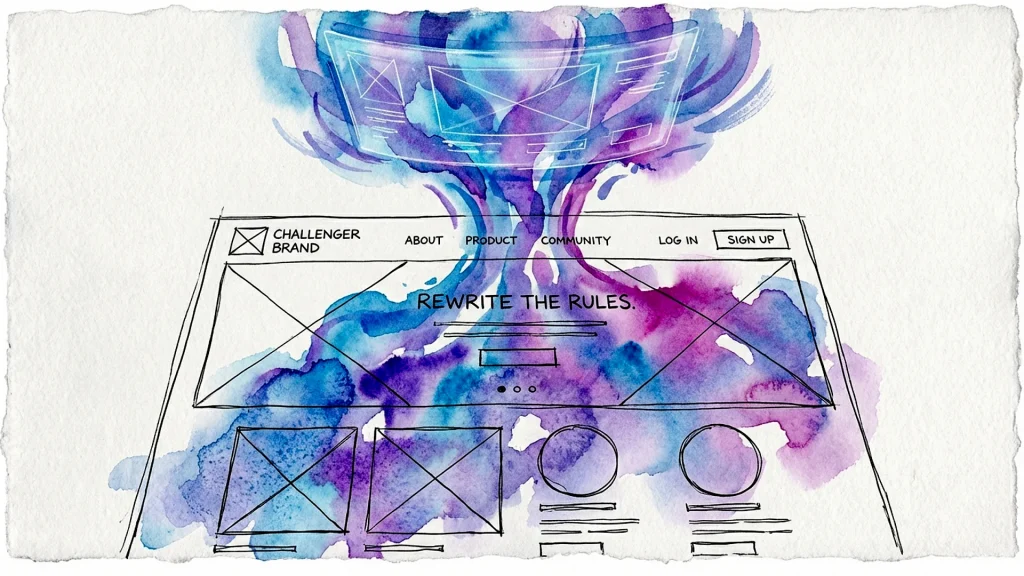
Why AI-Driven Design Tools Are Game-Changers for Challenger Brands
Picture this: your company delivers exceptional work—projects that exceed expectations, solve complex problems, and generate real results. Yet when prospects visit your website, they see something that looks like it was built in 2012. The disconnect is jarring, embarrassing even! For mid-market companies competing in construction, industrial manufacturing, or B2B services, this gap between operational excellence and digital presence isn’t just an aesthetic issue—it’s a competitive liability that costs you deals. This is precisely where AI-driven design tools are revolutionizing the playing field, and why they’re becoming essential components of Transformative Strategic Web Design & Storytelling for Challenger Brands.
The emergence of AI-powered design platforms has fundamentally democratized access to sophisticated web design capabilities that were previously exclusive to enterprise-level brands with unlimited budgets. For challenger brands sitting at position three or four in their markets, these tools represent more than technological advancement—they’re strategic weapons that enable you to compete visually and functionally with market leaders without the astronomical price tags traditionally associated with premium design work!
Understanding the AI Design Revolution
- Machine learning algorithms that analyze millions of high-performing design patterns
- Automated layout optimization based on user behavior data
- Intelligent color palette generation aligned with brand psychology
- Dynamic content adaptation for different audience segments
The fundamental shift happening right now isn’t just about automation—it’s about augmentation! AI-driven design tools don’t replace human creativity and strategic thinking; they amplify it exponentially. These platforms leverage sophisticated machine learning models trained on millions of successful design implementations, enabling them to suggest layouts, color combinations, and user experience patterns that have proven effective across industries.
What makes this particularly exciting for challenger brands is the speed-to-market advantage. Traditional web design projects can drag on for months, involving endless revision cycles and stakeholder debates. AI tools compress this timeline dramatically by providing instant visualization of multiple design directions, allowing marketing directors to make informed decisions quickly. This velocity matters tremendously when you’re trying to overtake market leaders who move slowly due to bureaucratic inertia!
Moreover, these tools incorporate real-time performance data, continuously learning from how visitors interact with your site. This creates a feedback loop of constant improvement that simply wasn’t possible with static design approaches. Your website becomes a living, evolving asset rather than a set-it-and-forget-it digital brochure that grows stale the moment it launches.
Key AI Design Tools Transforming Web Development
- Generative design platforms that create multiple design variations instantly
- AI-powered image editing and enhancement tools
- Intelligent typography pairing systems
- Automated accessibility compliance checkers
- Predictive user experience optimization engines
Platforms like Adobe Sensei are embedding AI capabilities directly into professional design workflows, offering features like content-aware fill, automatic object selection, and intelligent cropping that save countless hours. For marketing directors managing lean teams, this efficiency translates directly to reduced costs and faster project completion—without sacrificing quality!
Figma’s AI-powered plugins are revolutionizing collaborative design processes, enabling teams to maintain consistency across hundreds of pages while automatically adapting designs for different screen sizes and contexts. This consistency is crucial for challenger brands building credibility; nothing undermines trust faster than a website that looks polished on desktop but broken on mobile devices.
Tools like Framer are pushing boundaries even further by combining AI-assisted design with no-code development capabilities. This convergence means that design decisions can be tested and validated in functional prototypes within hours rather than weeks. For companies in unsexy industries trying to project sophistication and innovation, this capability to rapidly iterate based on user feedback is transformative. The connection between premium visual execution and revenue generation—explored thoroughly in The ROI of Premium Narrative Design: Why It Matters for Challenger Brands—becomes operationally achievable at scale!
Strategic Implementation for Mid-Market Companies
- Aligning AI tool selection with specific business objectives
- Integrating AI capabilities with existing design processes
- Training teams to leverage AI effectively without losing creative control
- Measuring performance improvements quantitatively
The critical mistake many mid-market companies make is treating AI design tools as magic solutions that work independently. They don’t! The most successful implementations happen when these tools are thoughtfully integrated into a broader strategic framework. This means starting with clear business objectives—whether that’s reducing bounce rates, increasing conversion on specific service pages, or improving lead quality—and then selecting AI capabilities that directly support those goals.
For challenger brands, the strategic advantage comes from using AI to punch above your weight class visually while maintaining authentic storytelling that resonates with your specific audience. This is where the intersection of technology and narrative becomes powerful. AI can help you achieve the polished aesthetic of market leaders, but your unique positioning, authentic case studies, and differentiated value proposition—the elements that make you a genuine alternative to the incumbent—must still come from human strategic thinking.
Implementation should follow a phased approach. Start by using AI tools for time-consuming tasks like image optimization, responsive design adaptation, and A/B testing of layout variations. As your team develops proficiency, expand into more sophisticated applications like personalized content delivery, predictive user journey mapping, and automated design system management. This graduated approach prevents overwhelm while building organizational capability systematically.
Overcoming Common Implementation Challenges
- Balancing automation with brand authenticity
- Managing stakeholder expectations about AI capabilities
- Ensuring design output aligns with strategic positioning
- Maintaining human oversight of AI-generated recommendations
One significant concern marketing directors rightfully have is whether AI-generated designs will feel generic or templated. This is a valid worry! The solution lies in understanding that AI tools should inform decisions, not make them autonomously. The most effective approach treats AI as a highly capable junior designer who can generate options quickly but still requires art direction and strategic guidance from experienced professionals.
Another challenge is the learning curve associated with new tools. However, most modern AI design platforms prioritize intuitive interfaces specifically because they’re targeting users who aren’t necessarily technical specialists. The investment in training—typically measured in days or weeks rather than months—pays dividends quickly through accelerated project timelines and reduced dependency on external agencies for routine design tasks.
Risk mitigation, which resonates strongly with challenger brand decision-makers, actually improves with AI implementation. These tools reduce subjective design debates by providing data-driven insights about what works. When a stakeholder questions a design decision, you can reference performance data from thousands of similar implementations rather than relying solely on designer intuition. This evidence-based approach aligns perfectly with the methodical, risk-conscious mindset common among founders and marketing directors in industrial and B2B service sectors.
Measuring ROI and Performance Impact
- Time savings in design production and iteration cycles
- Improved conversion rates through optimized user experiences
- Reduced cost per acquisition for qualified leads
- Enhanced brand perception metrics
- Increased engagement and time-on-site statistics
For companies evaluating whether to invest in AI-driven design capabilities, quantifying return on investment is essential. The good news is that these tools generate measurable improvements across multiple dimensions! Start by establishing baseline metrics before implementation—current design production timelines, website conversion rates, lead quality scores, and bounce rates on key pages.
Post-implementation, most mid-market companies report 40-60% reductions in time required for design iterations and revisions. This efficiency gain alone often justifies the investment, especially for marketing teams stretched thin across multiple responsibilities. More importantly, the quality improvements driven by AI optimization typically yield 15-30% increases in conversion rates on critical pages—improvements that directly impact revenue generation.
The connection to High-End Visual Design: Creating a Memorable Brand Presence Online becomes evident when you consider perception shifts. Companies implementing AI-enhanced design strategies consistently report improved brand perception scores, with prospects describing their websites as more professional, trustworthy, and sophisticated—exactly the perception shift needed to compete with market leaders!
Future-Proofing Your Digital Presence
The trajectory of AI in web design is clear: these capabilities will become table stakes rather than competitive advantages within the next few years. For challenger brands, the strategic imperative is to adopt these tools now while they still provide differentiation. Early adopters gain not just the technological benefits but also the organizational learning and process refinement that creates sustainable competitive advantages!
Looking forward, we’re moving toward a world where websites adapt dynamically to individual visitors in real-time, where design systems maintain themselves automatically, and where performance optimization happens continuously without human intervention. Challenger brands that build these capabilities now will be positioned to leverage increasingly sophisticated AI tools as they emerge, while competitors who wait will face steeper learning curves and larger capability gaps.
The revolution in AI-driven design tools isn’t coming—it’s here! The question isn’t whether to adopt these capabilities but how quickly you can integrate them strategically into your web design approach. For mid-market companies tired of digital presences that don’t reflect the quality of their actual work, these tools offer a practical path to competing visually with market leaders while maintaining the authentic storytelling and strategic positioning that make you a genuine challenger. The combination of AI efficiency with human strategic thinking creates something powerful: websites that look premium, perform exceptionally, and drive real business results. Now is the moment to embrace these tools and transform your digital presence from liability to strategic asset!
Frequently Asked Questions
AI-driven design tools utilize artificial intelligence to enhance the web design process. They help designers create high-quality websites faster by analyzing user data and automating repetitive tasks, thus allowing for greater creativity and efficiency.
Challenger Brands can significantly improve their web presence using AI-driven design tools. These tools help create user-centric experiences tailored to their audience, allowing them to stand out in competitive markets and boost engagement.
AI design tools provide mid-market brands with affordable, scalable solutions that adapt as the business grows. They facilitate seamless integration with existing systems, enhancing overall digital presence without requiring extensive resources.
User-centric design is crucial for B2B brands as it focuses on creating websites that meet the needs of their specific audience. This approach enhances user experience, increases conversion rates, and gives brands a competitive edge in their industry.
Before adopting AI design tools, evaluate your existing systems’ compatibility and the potential learning curve for your team. Consider the long-term benefits, such as improved efficiency and user experience, against initial investment and implementation challenges.
AI-driven design tools can streamline your web design strategy by automating key processes, personalizing user experiences, and providing insightful data analytics. This efficiency allows you to focus more on creative aspects while ensuring a high-quality web presence.
The future looks bright for Challenger Brands embracing AI-driven design tools as they can quickly adapt to market changes and enhance customer loyalty. These tools enable brands to innovate and maintain relevance, positioning them as industry leaders in their respective fields.